.png)


Autism Digest: Movement Minute from Kidisthenics

How Rhythmic Movement Training Supports Nervous System Regulation
By Kylie Capuano
Rhythmic Movement Training is a movement-based approach that uses gentle, repetitive, and patterned motions to support nervous system organization, regulation, and motor development. These movements mirror the natural rhythms the body experiences early in life – such as rocking, crawling, and cross-body patterns – which help lay the foundation for balance, coordination, and emotional regulation. For many individuals on the autism spectrum, these early movement patterns may not fully integrate, making rhythmic movement a valuable tool for supporting regulation later on.
A core element of rhythmic movement training is rocking. Rocking provides consistent input to the vestibular system, which is responsible for balance, spatial awareness, and the body’s sense of orientation in space. When the vestibular system receives slow, predictable movement, it sends calming signals to the brain that help reduce stress responses and improve the ability to stay regulated. This is why rocking movements can be especially effective for individuals who experience sensory overload, anxiety, or difficulty maintaining focus.
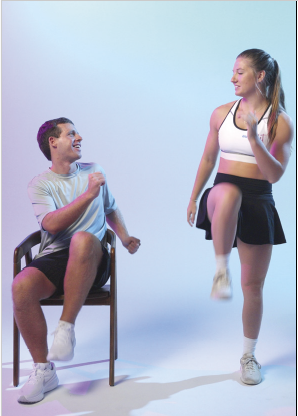
Equally important is bilateral coordination, or the ability to use both sides of the body together in a coordinated way. Movements that cross the midline, such as touching the right hand to the left knee, require communication between the left and right hemispheres of the brain. Strengthening this connection supports motor planning, posture, attention, and even skills like reading and writing. For individuals with sensory or motor integration challenges, these movements may not come automatically and benefit from intentional practice.
By combining rhythmic, vestibular-based input with bilateral coordination, rhythmic movement training supports the nervous system’s ability to organize, regulate, and adapt. Over time, these simple yet purposeful movements can help individuals feel more grounded, focused, and confident in everyday life.
Autism Digest is proud to feature Movement Minute and Kylie in every edition
Watch Movement Minute here --https://tinyurl.com/mrys4jfk
Visit Kidisthenics -- www.Kidisthenics.org



I absolutely love the concept of integrating movement into daily routines, especially for kids on the spectrum. My son benefits immensely from fnaf 2 physical activity it really helps him focus! Thank you for sharing these practical tips!
Success in Drift Hunters comes from a balance of precise control, practice, patience, and a strong understanding of car handling. Every missed corner or failed drift helps players learn better timing, steering techniques, and throttle control, allowing them to gradually improve their skills on every track.